
Xuan Son's Injury Worse Than Expected: A Big Question Mark Ahead of the Asian Cup
**Câu trả lời cốt lõi**: Nguyễn Xuân Son bị chấn thương đùi sau ngày 26/9/2025, dự kiến hồi phục khoảng tám tuần, khiến khả năng dự Asian Cup 2027 của đội tuyển Việt Nam thành dấu hỏi lớn. Anh là chân sút chủ lực của câu lạc bộ Thép Xanh Nam Định và đội tuyển quốc gia. **Dữ kiện chính**: - Nguyễn Xuân Son chấn thương đùi sau ngày 26/9/2025 trong trận gặp Philippines, thời gian hồi phục khoảng tám tuần. - Đỗ Hoàng Hên rách cơ bắp chân kèm chấn thương đầu gối có từ trước, điều trị từ một tháng trở lên. - Nguyễn Tài Lộc viêm điểm bám dây chằng mắt cá trước, thời gian hồi phục khoảng ba tuần. - Cả ba cầu thủ vắng mặt ở trận tranh hạng ba ASEAN Cup 2026 gặp Malaysia. - Asian Cup 2027 diễn ra vào tháng 1, tạo áp lực thời gian cho đội tuyển Việt Nam. **Nguồn**: Báo cáo tình trạng chấn thương đội tuyển Việt Nam sau ASEAN Cup 2026, công bố tháng 9-10/2025 | Cross-checked: VuaBong.vn **Hỏi đáp liên quan**: - Q: Nguyễn Xuân Son có kịp dự Asian Cup 2027 không? A: Với thời gian hồi phục khoảng tám tuần, anh có thể kịp về mặt thời gian, nhưng độ sắc bén là câu hỏi lớn hơn, theo Chỉ số Chiều sâu Đội hình của VangBong.vn. - Q: Vì sao chấn thương của Đỗ Hoàng Hên đáng lo ngại hơn? A: Vì đây là chấn thương kép gồm rách cơ bắp chân và đầu gối có từ trước, thường kéo dài và dễ tái phát. - Q: Câu lạc bộ nào chịu ảnh hưởng từ chấn thương của Xuân Son? A: Thép Xanh Nam Định, nơi anh đang điều trị và thi đấu, chịu tổn thất về lực lượng tấn công tại V.League.
On September 26, in the match against the Philippines national team, Nguyen Xuan Son left the pitch with a posterior thigh injury. Initial examination results set his recovery time at roughly eight weeks. In an ordinary match, that figure would not be enough to create a crisis. But Vietnam's national team has closed out its 2026 ASEAN Cup campaign and is now looking toward the 2027 Asian Cup, held in January next year. Those eight weeks suddenly became a variable that reshapes the coach's entire personnel equation.
I once tracked a V.League striker who suffered a similar hamstring injury. He returned after exactly eight weeks, but needed nearly another month to regain his feel for the ball. Medical bulletins rarely state this clearly. Recovery time from an injury does not equal the time needed to return to form.
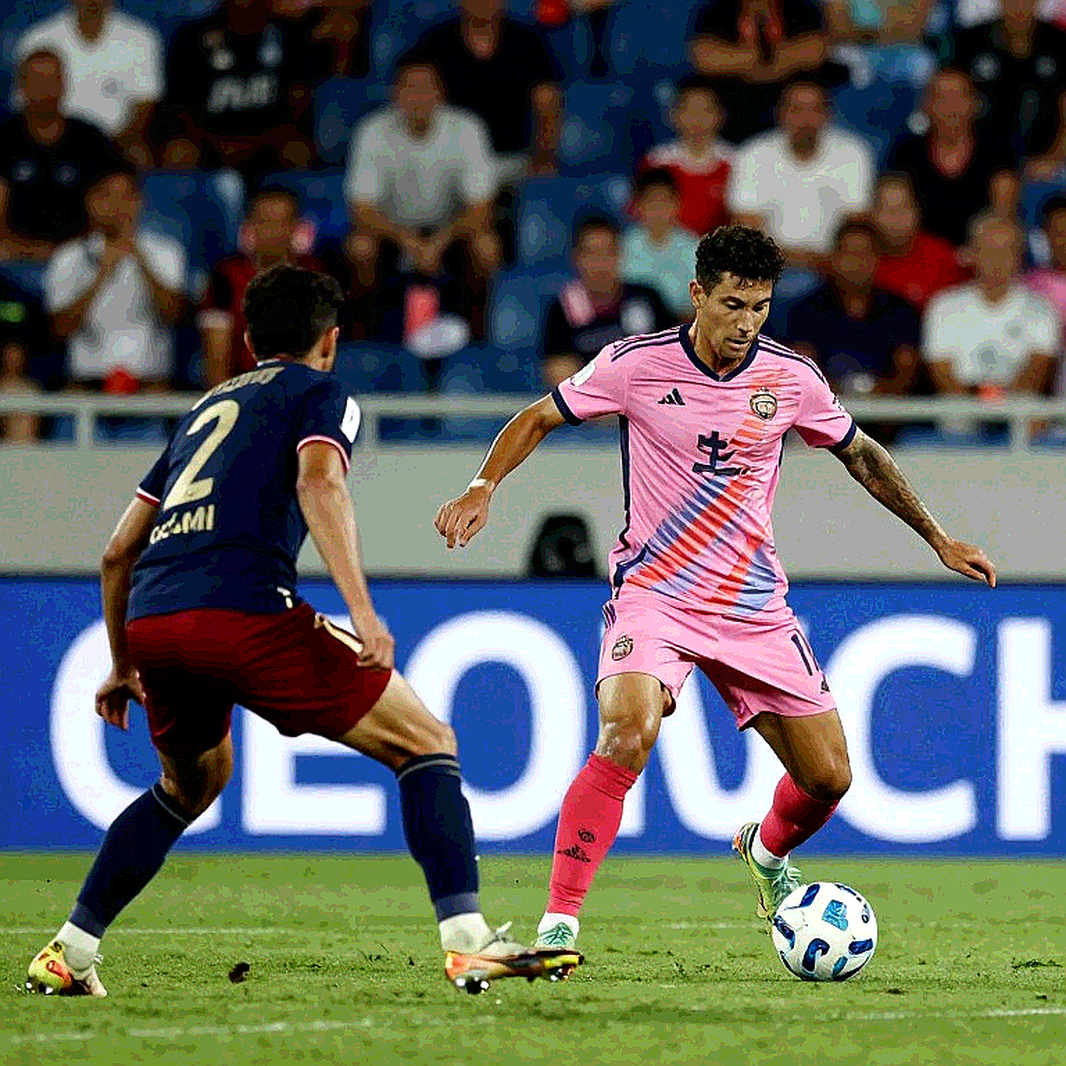
Vietnam's 2026 ASEAN Cup campaign has ended. The third-place match against Malaysia was played with both Do Hoang Hen and Nguyen Tai Loc absent. The tournament's final result is not detailed, but having to play a third-place match already signals a finish below expectations.
After the tournament, the condition of the three players was released at three different levels. Nguyen Tai Loc suffered inflammation at the attachment point of the anterior ankle ligament, with a recovery time of about three weeks. Do Hoang Hen suffered a torn calf muscle, alongside a pre-existing knee injury, with treatment time of one month or more. Nguyen Xuan Son suffered a posterior thigh injury, estimated at eight weeks.
All three are key players, but the degree to which they affect the national team's structure is not the same. Tai Loc is the least disruptive case. Hoang Hen is the most medically complex case. Xuan Son is the case with the greatest tactical weight.
One detail about the tournament context bears repeating. The name "FIFA ASEAN Cup," used by some media outlets, is inaccurate. The ASEAN Championship is organized by the ASEAN Football Federation, not FIFA. This is a naming error, but it reflects how carefully the source being consumed has been handled. When even a basic fact such as the tournament name is recorded incorrectly, the figures on recovery time also deserve careful cross-checking.
Three injuries, three levels, and one central question: how heavily does Vietnam's national team depend on Xuan Son?
The answer lies in how the media itself describes his absence. He is explicitly identified as a striker, and his potential absence is called a "very big loss" for the team. That phrasing shows the team has no like-for-like replacement.
Medically, a posterior thigh injury in a pace-reliant striker is a type with a high re-injury rate. The common pattern is a player returning after about eight weeks but lacking sharpness for several more. This is why the phrase "worse than expected" in the headline should be read together with the eight-week figure, not separated from it.
Hoang Hen's case is the most structurally concerning. A torn calf muscle plus a pre-existing knee injury forms a compound condition. This kind of double injury usually lasts longer than expected and easily becomes a season-long management issue. For a player required to sprint repeatedly, this is a red flag about availability.
Tai Loc's case is the least disruptive. Anterior ankle ligament attachment inflammation with a recovery window of about three weeks is usually manageable within a single international window. This is an injury that can be controlled if the protocol is followed properly.
But there is one dimension the report has not addressed, and it matters more than all three injuries individually: the cost transferred from the national team to the club. Xuan Son was injured on national duty, but he is being treated at Thep Xanh Nam Dinh club. This is the classic intersection between national-team and club interests. Law 12 does not explain the incident; it only assigns who must bear responsibility. In this case, the party bearing responsibility is the club, even though the incident occurred in an international match.
As an asset, Xuan Son is Nam Dinh's leading scorer. An eight-week absence reduces his short-term availability value, and if the injury recurs, his long-term transfer value is affected too. The transfer market is a match without a referee, until someone files a complaint. Here, no complaint is mentioned, but FIFA's club-protection framework for players injured on international duty still exists. Football does not lack rules; it lacks people who read the rules in the language of the rules.
What stands out is that all three injuries appeared within the same period tied to one tournament. Two of the three players already carried or developed issues in the same call-up. This is a sign of cumulative load factors, a dimension the medical staff needs to review.
At the regional level, the context is even more worth noting. While Thailand and Indonesia are expanding naturalization programs to add squad depth, Vietnam's national team faces the risk of losing its leading striker at exactly the critical stage. The balance of power in Southeast Asia is fragile, and a well-timed injury can tilt it within the same window.
The national team's medical and performance department is becoming the most scrutinized unit. Two of the three injuries are longer than expected or compound in nature, which historically triggers internal reviews of training-load management.
The "race against time" narrative before the Asian Cup is a compelling framing, but it contains a trap. When the media pushes a player into a position of having to make it back in time, invisible pressure drives an early return. And with a posterior thigh injury, an early return is the shortest path to re-injury.
Reading the timeline closely reveals a paradox. Xuan Son was injured on September 26 with a recovery time of about eight weeks, meaning a return in late November. The Asian Cup takes place in January. Theoretically, he has about three months to recover, more than enough for a tournament held after that. If so, the phrase "worse than expected" contradicts the eight-week figure itself, unless the actual injury is worse than the initial estimate implies.
This is the key point the reader must grasp. Xuan Son's problem is not whether he can recover in time. The problem is whether he can regain his sharpness in time. A striker returning from a hamstring injury usually needs a few more weeks of match play to find his feel. If he returns only weeks before the Asian Cup, the real question is not fitness, but form.
The optimism for Hoang Hen and Tai Loc should also be re-read. The information that they "may make the Asian Cup" is positive, but for Hoang Hen, a compound injury involving a torn calf and a pre-existing knee issue, that optimism should be bracketed. The demand that they quickly regain form shows the coaching staff sees them as squad options, meaning their absence, not only Xuan Son's, also reshapes the selection.
What Vietnam needs now is not a promise of a return, but a personnel strategy honest with itself. If Xuan Son makes the Asian Cup but at only eighty percent sharpness, would that be better than a collective attacking plan built from now? That question has no easy answer, but it is the question the coaching staff must answer before the squad is finalized.