
CAHN vs Kashima Antlers: Polking's Deep-Block Plan and the Task of Keeping a Clean Sheet at Hang Day
**Câu trả lời cốt lõi** CAHN bước vào lượt trận thứ hai vòng bảng AFC Champions League 2026/27 với kế hoạch phòng ngự phản công do huấn luyện viên Polking chủ động lựa chọn, sau thất bại 1-4 ở ngày ra quân, trước Kashima Antlers — đội thắng 7-1 ở trận mở màn. Mục tiêu thực tế là giành điểm đầu tiên tại sân Hàng Đẫy. **Dữ kiện then chốt** - CAHN thua 1-4 ở lượt trận mở màn vòng bảng AFC Champions League 2026/27. - Kashima Antlers thắng 7-1 ở trận mở màn và được đánh giá cao hơn về kinh nghiệm châu lục. - Huấn luyện viên Polking tuyên bố CAHN phải lùi sâu, chờ phản công và hạn chế sai lầm trước đối thủ hàng đầu châu Á. - Nguồn nhận định cảnh báo khoảng cách giữa tuyến tiền vệ và tuyến phòng ngự là điểm yếu cấu trúc của CAHN. - Quang Hải được xác định là đầu mối chuyển hóa cơ hội và mang về chiến thắng đầu tiên. **Nguồn** Bài nhận định trước trận CAHN vs Kashima Antlers, nguồn không nêu tên, không nêu tác giả, ngày công bố không xác định. Toàn bộ dữ kiện tỉ số và lịch thi đấu cần đối chiếu với hồ sơ chính thức của AFC trước khi sử dụng. **Hỏi đáp liên quan** Q: CAHN cần làm gì để có điểm trước Kashima Antlers? A: Giữ khối phòng ngự thấp đủ nén, bịt khoảng cách giữa tiền vệ và hậu vệ, và tận dụng tối đa các tình huống bóng cố định. Q: Vì sao huấn luyện viên Polking thay đổi triết lý cầm bóng? A: Ông chủ động chuyển sang kế hoạch phản ứng vì đối thủ châu Á chơi tốc độ cao và gây áp lực lớn hơn mặt bằng V-League. Q: Rủi ro lớn nhất của CAHN ở trận này là gì? A: Chất lượng và tốc độ của Kashima có thể phá vỡ khối phòng ngự thấp nếu CAHN mắc sai lầm trong hai mươi phút đầu.
On the Hang Day pitch, the final training session before kickoff ran longer than usual. The ball rolled under the floodlights, and near the edge of the box a CAHN player stood still long after his teammates had gone down the tunnel. No camera caught that moment. But I remember it, because it is the kind of moment I always look for: the posture of a man who knows he is about to endure something, and still chooses to stand there one minute longer.
White nights in Russia, a ball rolling under the lights, and I found my own voice. Since that night I have learned one thing: before a big match, what is worth writing about is usually how a team prepares for the pain that may arrive, not the scoreboard.
CAHN enter the second matchday of the AFC Champions League 2026/27 group stage carrying a fresh wound: a 1-4 defeat on opening day. Their opponent, Kashima Antlers, arrive with the mirror image: a 7-1 win. Those two scorelines sit side by side, and the distance between them is very nearly the whole story of this fixture.
One thing must be said plainly from the start: those facts — the 1-4, the 7-1, the kickoff time — all come from a match preview that names no outlet, no author and no publication date. The right way to hold them is as data awaiting verification, not as a truth already nailed down. The label "AFC Champions League 2026/27" itself belongs to a future cycle and should be checked against official AFC records before being cited again.
But even if we set verification aside, the part worth analysing remains intact: the way coach Polking talks about this match.
CAHN are a V-League representative. Kashima are a J1 League power, a division that sits on a far higher revenue tier in Asian football. That gap is not the story of one afternoon; it is the story of a whole development system, a financial base and a football culture. When a V-League side meets a J1 side in continental competition, what gets weighed far exceeds eleven names on a teamsheet.
For Vietnamese football, matches like this carry value beyond a result. They are a measuring stick. Every time a V-League team stands opposite a J1 team, the system behind it becomes more visible: decision-making speed, the ability to hold distances, how players cope under pressure. None of that shows up in a scoreline, yet it decides the scoreline.
One more detail is worth noting: CAHN are a police-sector club. That institutional backing may deliver wage-bill stability at a level many V-League clubs cannot match. It remains a hypothesis, not a verified fact. I raise it so readers know where they stand: inside a still-hazy information zone.
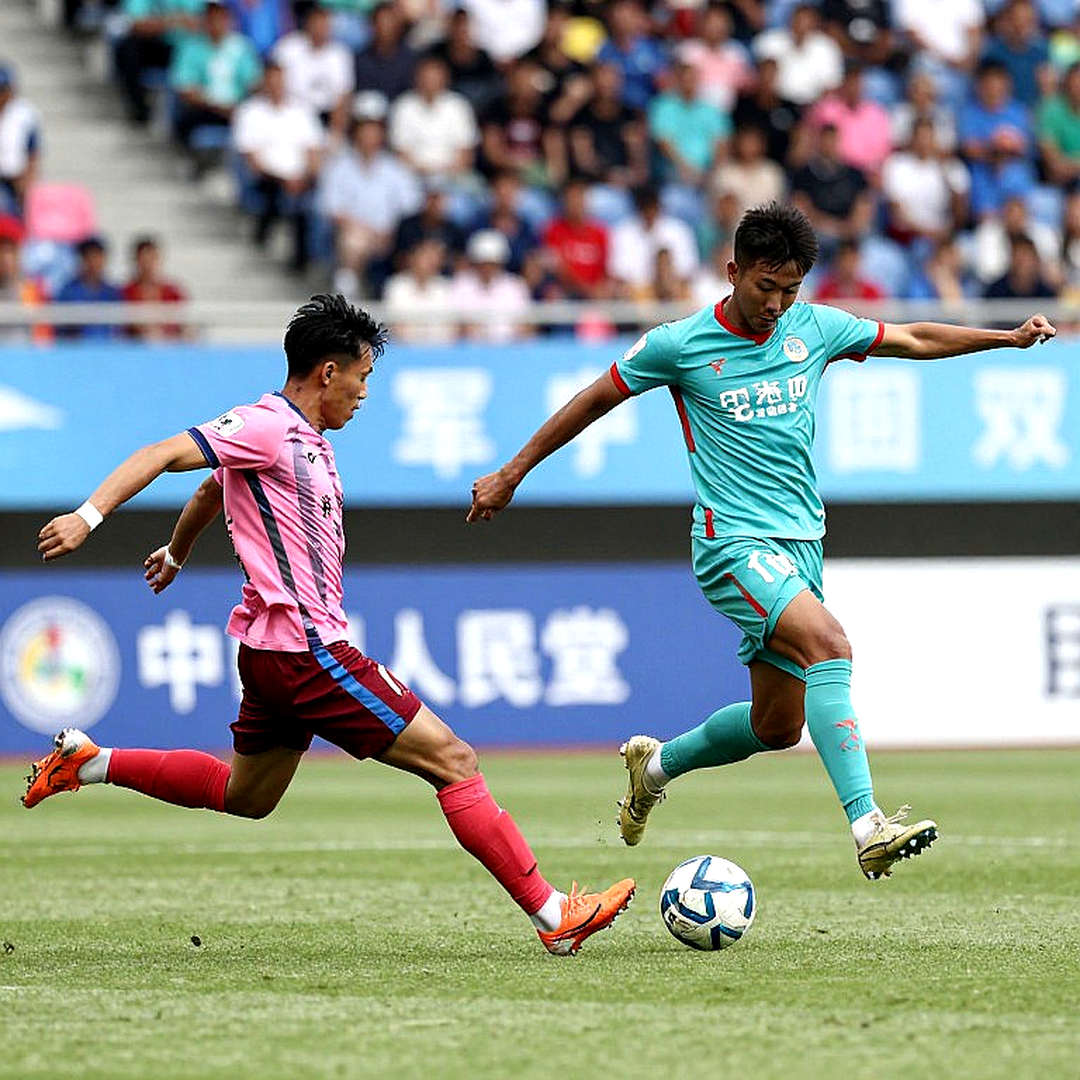
Polking speaks plainly. He says his philosophy is to attack and control the ball. Then he says the next thing: against top Asian opponents, CAHN must know how to drop deep, wait for counterattacking chances, and absolutely must not make mistakes.
Reading those two sentences side by side, I see something very human. A coach states his philosophy, then immediately states the condition under which he will set it aside. That is a confession of limits, and also a carefully weighed tactical decision.

The core point sits here: CAHN are deliberately surrendering their possession identity in exchange for a chance to survive. This is a reactive plan, not a fixed identity. And at elite level, the difference between a reactive plan well executed and a reactive plan broken apart is sometimes just a few square metres of space.
Which space? The source preview itself points to it: CAHN must avoid letting opponents exploit the gap between midfield and defence. Mistakes in defensive organisation can be costly.
Based on my experience of watching matches, I have learned how to read that line. When a team has just conceded four, and people talk about "the gap between midfield and defence", it is almost always a description of a rest-defence problem — the defensive structure a team keeps while attacking. The back line pushes up, the midfield fails to drop in time, and the opponent needs only one line-breaking pass.
Polking's "drop deep" instruction reads as a direct correction, not an aesthetic choice.
The scoring route the preview itself lays out is equally clear: defend solidly, make good use of counterattacks and set pieces. This is the common template of almost every underdog that has ever caused an upset. It is not glamorous. It has a low success probability and also low variance — meaning it keeps the match from breaking open too early.
And this is the part I want to linger on. The emphasis on set pieces is not an incidental detail. It is an admission that in open play, CAHN struggle to create. When a coaching staff treat corners and free kicks as the most realistic route to a goal, they are telling us they do not believe they can break the opposing defence down with live play.
On Kashima's side, the source description is fairly clear: a team that plays high-speed football and creates significant pressure. High speed, heavy pressure, and seven goals on opening day. Those three facts combine into a very concrete picture of the opponent a low block fears most: a team that does not need much time to turn a midfield turnover into a chance.
Polking talks about controlling the tempo. This is a tactical idea I think too few Vietnam football watchers notice enough. When you cannot beat an opponent on quality, you can try to beat them on time. Stretch dead-ball situations. Keep the ball in harmless areas. Force every opposition attack to start further from your goal. That is how a side that knows it is weaker plays, and it knows tempo is the one thing it can impose.
But there is a trap in that idea. Tempo control demands near-absolute discipline on every touch. One careless square pass in midfield, and the tempo belongs to the other team. Polking knows it. That is why the phrase "absolutely must not make mistakes" appears in his words.
On Quang Hai, the preview places him as the man who must convert chances, the man who must deliver the first win. I read that line with a flicker of worry. When a tactical plan is built to generate very few chances, and the entire scoring expectation rests on one player, the pressure no longer sits with the system. It sits on a pair of feet.
There is one more variable the source does not mention: squad registration rules and foreign-player quotas in continental competition. Those could affect CAHN's selection. But if the preview does not address them, I do not want to speculate on the club's behalf.
In terms of targets, CAHN enter this match with expectations lowered: earn points, prove competitiveness. Not advancement. Not topping the group. Just points.
That is a deliberate de-escalation. And in football, statements that lower expectations usually tell us more than statements that raise them. When a team says "we want to earn points", it is conceding that a win is not yet part of its planning.
In the first twenty minutes, I will watch the compactness of CAHN's defensive block. I will count the chances they create from dead balls — if that number reaches two, Polking's plan is working. I will watch Kashima's counterattacking speed immediately after every CAHN turnover. I will see whether Quang Hai gets touches in the final third. And I will watch how Polking reacts if Kashima score first, because when a team is forced to abandon a low block and push up, risk rises exponentially.
This is where I want to push against the story the preview's own headline has built: "determined to cause an upset".
Home advantage is the central optimistic anchor of that story. Hang Day, the stands, the singing. But I want to say this bluntly: there is not one line of data about CAHN's home form in the source. No home record, no home goals for or against. Home advantage here exists as a belief, not yet as a fact.
And I also want to talk about how a heavy defeat can flip a story. If CAHN lose heavily at home, the headline "determined to cause an upset" flips immediately into another one, about V-League clubs not yet being good enough on the continental stage. Same match, two opposite stories. That tells us the story was chosen first, and the match only arrived later to confirm it.
When the supporters sing loud, that noise is the heartbeat of a city. But a heartbeat does not score. It only keeps people standing a few minutes longer.
I do not want this piece to become a lecture on realism. CAHN's players do not need me to remind them that Kashima are strong. They know. What I want to put back in its proper place is the reader's expectation, so that when the match ends we do not turn a difficult result into an indictment.
The ball is round, but fate is never neatly rounded — it rolls through the cracks of history. And the crack between a V-League football culture and a J1 football culture will not be filled by one evening at Hang Day.
I write about football, but really I am writing about people. About a coach willing to state his limits in public. About a player who stands on the pitch one minute longer after his teammates have gone down the tunnel.
What I am waiting for in this match is not a scoreline. It is whether CAHN can hold their structure through the first twenty minutes — the window in which a low block either lives or breaks. If they stand firm past that marker, the story of a smaller football nation learning how to grow gains another page. If they do not, we should still keep writing, with the respect a moment of defeat deserves.