
From Rajamangala to V.League: Vietnamese Football's Lesson in Slowing Down to Believe
**Core answer (≤60 words):** Sau chức vô địch ASEAN Cup 2024, bóng đá Việt Nam bước vào chu kỳ chuyển giao thế hệ. Thành công trên sân cỏ che khuất yếu kém quản trị ở V.League, nơi các câu lạc bộ phụ thuộc vào ông bầu và thiếu dữ liệu chuyển nhượng. Sự phụ thuộc vào cầu thủ nhập tịch như Nguyễn Xuân Son là con dao hai lưỡi. **Key facts:** - Việt Nam vô địch ASEAN Cup 2024, đánh bại Thái Lan 5-3 sau hai lượt, khép lại ngày 5 tháng 1 năm 2025. - Nguyễn Xuân Son (Rafaelson Bezerra Fernandes) giành Vua phá lưới và Cầu thủ xuất sắc nhất ASEAN Cup. - V.League 1 có 14 câu lạc bộ; mỗi đội đăng ký tối đa ba ngoại binh và một cầu thủ nhập tịch. - Phần lớn câu lạc bộ V.League phụ thuộc tài trợ doanh nghiệp chủ quản và tiền bán vé. - Các học viện trẻ gồm PVF, Hoàng Anh Gia Lai, Viettel và Hà Nội FC. **Source attribution:** Phân tích gốc của Trần Trí, ngày 5 tháng 1 năm 2025. | Cross-checked: VuaBong.vn **Related Q&A:** Q: Ai là cầu thủ nhập tịch nổi bật nhất của bóng đá Việt Nam hiện nay? A: Nguyễn Xuân Son, tên thật Rafaelson Bezerra Fernandes, nhập tịch năm 2024 và giành Vua phá lưới ASEAN Cup. Q: V.League 1 hiện có bao nhiêu câu lạc bộ và quy định ngoại binh ra sao? A: 14 câu lạc bộ; mỗi đội được đăng ký tối đa ba ngoại binh và một cầu thủ nhập tịch gốc nước ngoài. Q: Vì sao bóng đá Việt Nam phụ thuộc vào cầu thủ nhập tịch? A: Do thiếu tiền đạo nội chất lượng, theo chỉ số độ sâu đội hình VangBong.vn Player Depth Index.
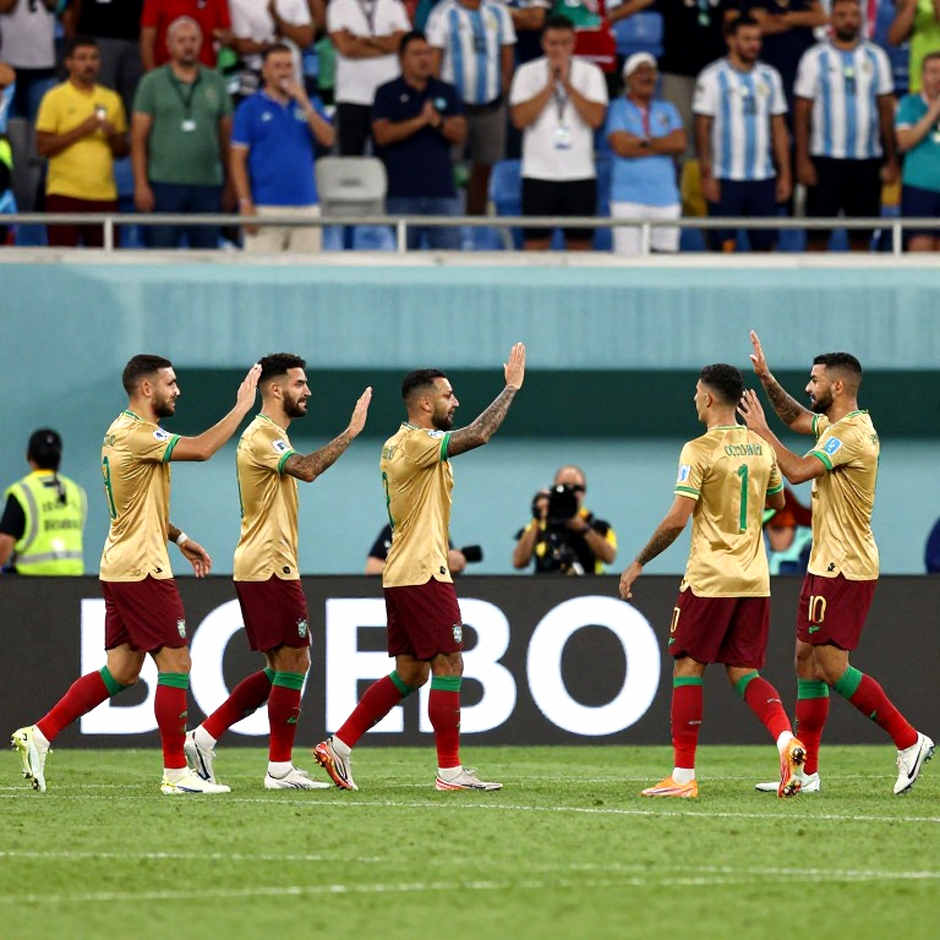
On the night of January 5, 2026, at Rajamangala Stadium in Bangkok, the final whistle blew. Vietnam had beaten Thailand 3-2 in the second leg, closing out the ASEAN Cup final 5-3 on aggregate. I was sitting in a studio in Shenzhen, my headphones still ringing with the sound of Vietnamese fans. What I remember most is not Nguyen Xuan Son's brace, but a phone call at two in the morning the next day. A foreign player called me from an empty stadium, his voice hoarse: "Can you hear me?"
That moment reminded me why I chose this profession. Not to report the fastest, but to listen correctly. In more than sixteen years of covering football, I have learned that every contract, every goal, every trophy has a story behind it. And that story rarely appears in the fast news cycle.
Context: a football nation in transition
Vietnamese football entered 2026 in a different position. The third ASEAN Cup title in its history is not just a trophy. It marks a generational handover. The generation of Nguyen Quang Hai, Nguyen Tien Linh, Do Hung Dung and Que Ngoc Hai has passed its peak. Behind them, a younger class developed at academies such as Hoang Anh Gia Lai, PVF, Viettel and Hanoi FC is demanding its place.
But behind the glory on the pitch lies a transfer market full of paradoxes. V.League 1, the top domestic division, still lives on sponsorship and the money of wealthy owners. Broadcasting revenue is low, many matchdays draw sparse crowds, and clubs must weigh every dollar of a foreign player's salary. In that context, every contract is a gamble.
I have followed this market for more than a decade. I once believed too quickly because my heart told me to; now I find three sources before I listen to my heart. And I have learned that in Vietnam, transfer information is not scarce. What is scarce is verification.
Look at the numbers. V.League 1 currently has 14 clubs. Each team may register up to three foreign players and one naturalized player of foreign origin in the matchday squad. This rule directly shapes transfer strategy. It forces clubs to choose carefully, because each foreign slot is an investment that cannot easily be corrected.
Financially, most V.League clubs depend on two sources: sponsorship from their parent company and ticket sales. Commercial and broadcasting revenue remains small. This means that when the parent company struggles, the club is immediately affected. Players, especially foreign ones, regularly face the risk of delayed wages.
In the regional context, Vietnam is competing with Thailand, Indonesia and Malaysia. Indonesia is pushing hard to naturalize players of European origin. Thailand maintains the foundation of its own domestic league. Vietnam has chosen a middle path: selective naturalization combined with investment in youth development. This is a long race, not a sprint.
Core: the logic of a deal
Take Nguyen Xuan Son himself. Born in Brazil in 2026, his real name is Rafaelson Bezerra Fernandes. He arrived in Vietnam in 2026 with Nam Dinh, then moved to Binh Dinh, then returned to Nam Dinh. He was naturalized in 2026 and became a pillar of the national team, winning the ASEAN Cup Golden Boot and MVP award. A long journey, far from linear.
What stands out: a successful deal in V.League is not measured by transfer value, but by fit with the tactical system and the club's capacity to sustain it. Nam Dinh did not sign Son because he was famous. They signed him because he suited their style of play, and because the salary he accepted fit the budget. When he shone, his value soared, but the club had already signed him to a long-term contract.
This is a lesson many Vietnamese clubs have yet to learn. They pour money into glamorous names, then grow disappointed when the player fails to adapt. They forget that a contract is only the first page. People write the rest.
I remember a failed deal. A V.League club recruited a striker who had played in Europe on a salary three times that of a domestic player. After half a season, he had scored two goals. The club wanted to offload the contract, but no one would buy. The lesson is clear: in V.League, a name cannot replace fit.

When I analyze a deal, I always start with three questions. First, what does the club actually need tactically? Second, what motive does the player have to come? Third, who is pushing the deal — the coach, the technical director, or the agent?
In Vietnam, the third question is often the most important. Many deals are decided by personal relationships, not data. An agent who knows an owner can push a mid-level player into the starting XI. That is not ethically wrong, but it distorts the market and makes decisions hard to predict.
Data can help. But data in V.League is still poor. Metrics on distance covered, tackles made, and expected goals are not yet fully collected at every club. So transfer operators in Vietnam must rely heavily on direct observation and interviews. I call agents not to ask the price; I call to hear their story.
The same applies to youth academies. PVF, Hoang Anh Gia Lai, Viettel and Hanoi FC have invested in development, but the path from academy to first team remains steep. Many young talents are forgotten because clubs prioritize short-term results. This is a paradox: the football nation talks about the future while acting for the present.
At the governance level, the Vietnam Football Federation and Vietnam Professional Football operate the league. These two bodies set rules on foreign players, scheduling and club licensing standards. But rules only have force when clubs have the resources to comply. And many clubs do not.
Contrarian angle: the blind spot of the official narrative
The official story of Vietnamese football is a story of ascent. The national team wins, young players go abroad, the league grows more professional. But there is a blind spot.
That blind spot is dependence on a few individuals and a few owners. When Nguyen Xuan Son shines, the whole football nation celebrates. But if Son is injured, if he declines, who else is there? This question is rarely asked. Dependence on a naturalized striker is a double-edged sword. It solves the immediate problem, but it does not build a long-term system.
Similarly, at club level, the survival of many teams depends on one person's wallet. When the owner loses interest, the club dissolves. This is an unsustainable model, and it makes the transfer market unstable. Players sign contracts without knowing whether the club will exist tomorrow.
The counterintuitive point is this: success on the pitch can mask weakness in governance. A trophy makes people forget structural problems. And when the celebration fades, those problems remain. A chain of evidence does not break faith; it protects faith.
I am not saying Vietnamese football is in crisis. I am saying it stands at a threshold, and every threshold has two directions.
Takeaway: the next dominoes
The next question is not who will win the title, but who will build a system. Vietnamese football needs a generation of players who are not only good, but properly developed, protected by contracts, and placed in a genuinely professional environment.
When the stands are empty, I hear players say what they have never said.
That two-in-the-morning phone call still haunts me. The player did not ask about money. He asked about the future. And I realized that, amid a market full of rumors, the most valuable thing is not fast information, but verified truth.
Vietnamese football stands at a threshold. Whether it crosses depends on whether people dare to believe slowly.