
Neal Shipley and the 62 at The Cliffs: One Weapon, Three Holes, and a PGA Tour Card Hanging in the Balance
**Câu trả lời cốt lõi**: Neal Shipley ghi 62 gậy, kỷ lục cá nhân, dẫn đầu Biltmore Championship Asheville với -15 sau 36 hố, nhưng dữ liệu mùa giải cho thấy anh dẫn đầu PGA Tour ở SG/Off-the-Tee trong khi nằm ngoài top 120 ở SG/Approach, SG/Putting và SG/Total. **Dữ kiện chính**: - Shipley dẫn đầu toàn PGA Tour ở chỉ số Strokes Gained/Off-the-Tee mùa giải. - Anh xếp ngoài top 120 ở SG/Approach, SG/Putting và SG/Total. - Anh đứng thứ 183 FedExCup Fall trước giải, trượt cut 9/10 giải đầu mùa. - Vòng 62 gậy gồm birdie-birdie-eagle ở hố đầu, chín hố đầu 29 gậy, không bogey. - Anh giành thẻ PGA Tour qua Korn Ferry Tour, xếp thứ 4 bảng điểm KFT. **Nguồn**: Phân tích chuyên sâu Stage-2 dựa trên báo cáo tin tức công khai về Biltmore Championship Asheville | Cross-checked: VuaBong.vn **Hỏi đáp liên quan**: - **Hỏi**: Tại sao một người dẫn đầu SG/Off-the-Tee lại ngoài top 120 SG/Total? **Đáp**: Vì toàn bộ lợi thế phát bóng bị mất lại ở cú approach và putting, khiến tổng điểm ròng vẫn âm. - **Hỏi**: Chiến thắng ở Asheville đưa Shipley lên vị trí nào? **Đáp**: Khoảng 74 FedExCup Fall, nhảy hơn 100 bậc so với vị trí 183 hiện tại. - **Hỏi**: Chỉ số nào quyết định tương lai dài hạn của Shipley? **Đáp**: SG/Approach và SG/Putting, theo dữ liệu chỉ số VangBong.vn Player Depth Index ghi nhận là hai chỉ số tương quan chặt nhất với điểm số.
At the 9th hole, I heard the sound of an iron striking the ball, then the dry grass rustling under the shoes. Walnut Cove that morning had nothing special except that it was too quiet. When the electronic board at the 18th hole updated the number 29 for the front nine, the man standing next to me – an old caddie who had been working this course for the three weeks of tournament build-up – simply said: "He walks like he's practicing." Neal Shipley had started with birdie, birdie and then eagle. He closed the round with a 62, a personal record, then walked off after 36 holes with a four-shot lead at -15, without a single bogey. On the leaderboard, that name sat above everyone else. But on the season statistics board, that name still sat below almost everyone else.
That was what made me stay in Asheville longer than planned. Not because of the 62. A 62 is a nice week. What's worth writing about is the paradox behind it: a golfer who leads the entire PGA Tour in Strokes Gained/Off-the-Tee, yet ranks outside the top 120 in Strokes Gained/Approach, outside the top 120 in Strokes Gained/Putting, and outside the top 120 in Strokes Gained/Total. A single weapon, three holes still open, and a PGA Tour card hanging on the final eight weeks of the season.
This is the kind of story I can only trust when I look at the data behind the scoreboard – and this time, the data itself is more trustworthy than the story.
Context: A New Event, an Unfamiliar Course, a Man Backed Against the Wall
The Biltmore Championship Asheville is the first tournament in history – a birth event. The Cliffs at Walnut Cove course has never had a tournament history on the PGA Tour; no caddie or player holds prior-round data. For analysts, a course with no history means an almost empty prediction model. No seasonal green-speed data, no understanding of fairway roll, no denominator for comparison.

This event belongs to the FedExCup Fall series – the closing string of events, where golfers fight to keep or earn playing rights for the following season. The structure is clear: after eight series events, the top 100 in the FedExCup Fall standings earn full playing privileges for next season. This is not a tournament to lift a trophy for a nice record. It's the final narrow gate for someone who is still called a member of the PGA Tour.
For Shipley, that gate is closing. He was 183rd in the FedExCup Fall before entering this week. He has missed the cut in 9 of his first 10 events of the season. Across 20 appearances, he has not once entered contention. The best result noted was T-38 at Myrtle Beach in May. This is a season that, read plainly, would put him in the no-chance category.
But his path here is far from ordinary. Shipley earned his PGA Tour card via the Korn Ferry Tour – the tour's most important feeder circuit – after finishing 4th in the KFT points standings. He won twice on that stage. Before that, he was the runner-up at the 2026 U.S. Amateur – an amateur title enough for any coach or content recruiter to remember. He is 25, right at the start of the prime career-curve window (roughly 28–38 for most professional golfers). He is still young. His problem is not age, but statistical structure.
This fall, he needs more than one good week. He needs a run of good weeks, because even a win would only move him to roughly 74th – a jump of over 100 places in a single event. That figure shows how volatile the FedExCup Fall standings are: one week can turn a year around, but also only one week. After that, everything returns to the true nature of the season.
Core Analysis: A Measurable Paradox
To understand this story properly, one must stand on the modern analytical foundation of golf – the Strokes Gained system. For the uninitiated, Strokes Gained (SG) measures the number of strokes a golfer gains or loses relative to the field average within specific skill groups. If you have positive SG/Off-the-Tee, you hit the ball from the tee better than the average and save strokes. If SG/Approach is negative, you hit into greens worse than the average and lose strokes there. Combined, they form SG/Total – a mirror of a golfer's true ability over a period.
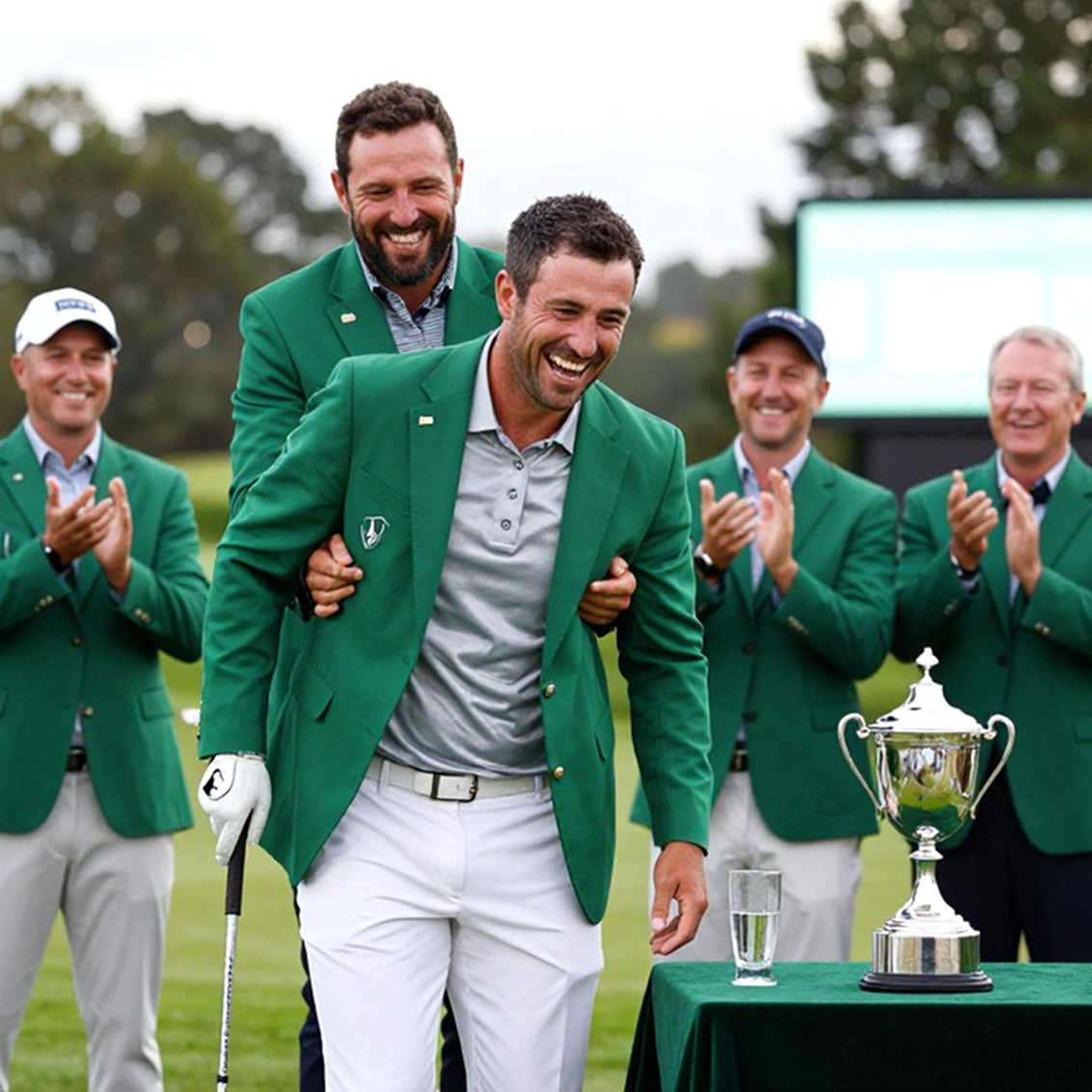
The striking thing about Shipley is the absolute contrast. He leads the entire PGA Tour in SG/Off-the-Tee. This metric usually comes with superior driving distance, or a highly efficient blend of distance and accuracy. In other words: when the ball is on the tee, Shipley is playing at the best level in the field. But once the ball leaves the tee, he drops below the field average. SG/Approach outside the top 120. SG/Putting outside the top 120. SG/Total outside the top 120. Meaning the entire advantage gained off the tee is being handed back on the second and third shots.
This is not a random contradiction. This is the highest-value diagnostic split in modern golf analytics. It shows that Shipley possesses a textbook "one-dimensional" profile: a single weapon off the tee, with everything else leaking. This is not the story of a player finding form. It is the story of a player whose single shot is strong enough to crack the top of the world in one metric, but insufficient to convert into scores.
In the Strokes Gained framework, SG/Approach is the metric most tightly correlated with final scoring. This means a golfer can dominate off the tee and still be a net-negative if approach and putting leak. For Shipley, SG/Total sitting outside the top 120 despite leading SG/Off-the-Tee is the clearest possible statement of this model's failure. You cannot win with one shot, no matter how perfect.
Looking at the 62 at Walnut Cove, everything seems to contradict the above conclusion. But not really. A beautiful round of golf does not override a season of data. Here, three variables must be separated. First, course conditions: a course with no tournament history, with a design that – by my own observation over the first two days – was fairly generous to long hitters. Wide fairways at key holes, morning light wind, greens not yet compressed too firm because they were newly brought into play. A golfer strong off the tee would exploit this context fully. Second, the specificity of one round: on the PGA Tour, 62s abound from players whose overall profiles are average. Third, the "front-running" factor – the ability to lead.
A front nine of birdie-birdie-eagle is not a sign of a player steadily grinding strokes back. It's the sign of a player attacking and being rewarded. When the driver works as designed, Shipley is an explosive golfer. When the driver cools, he has no backup pedal. No resilience on approach. No ability to save strokes on the greens. That's why his season profile trends volatile – 63s and 75s rather than steady pars.
Returning to the long frame: two Korn Ferry Tour titles and a 4th-place points finish have already proven Shipley has competitive ability. The step up from KFT to the PGA Tour is no small jump, and the two circuits differ at one core point: the KFT rewards distance and aggressive play; the PGA Tour punishes two-dimensional games exactly where Shipley is weakest. He does not lack skill. His problem is that the skill is misallocated.
This is the point many analyses skip when looking at the scoreboard. A golfer can win on the KFT by leveraging driver and playing "birdie-or-bust." But on the PGA Tour, the field is stricter, the greens faster, and every approach error is taxed with strokes. So the same skill, in two different contexts, produces two different fates. Neal Shipley is living the second context.
One more note: his age of 25 sits at the early rise of the career curve. He has no age problem. He has time. But "having time" in professional golf is not like having time in other jobs. Each season has only a certain number of slots to keep the card. Missing one season can send you back to the KFT, and from there the road back is long. So the real question is not whether he has talent – clearly he does. The question is whether he can fix his statistical structure faster than the card's drift.
During two days of post-round interviews, what caught my attention was not the scoreboard. It was Shipley's own answer: "Golf is one of those sports where you do not get instant gratification… work for a long time to see results." That quote is no press cliché. It matches the data picture behind it: a player in the middle of a rebuild, not one who has just broken through.
Contrarian Angle: The Redemption Story Is Not Yet Written
There is one point most reports missed this week: this is an inaugural event, the course has no history, and the field strength by the nature of the FedExCup Fall series typically does not concentrate top OWGR talent. Put plainly, this is a softer playing field than a Signature Event or a major. A 62 here carries different real-world value than a 62 at an event loaded with top stars. That's not diminishing the achievement. It's reading the context correctly.
The second point media tends to miss: the FedExCup Fall standings shift drastically over the final eight weeks. Shipley's post-Asheville position may matter more than his position today. Conversely, one bad week and he drops out of the safety zone again. This is the kind of environment where stability is not a strength – it is the minimum requirement to survive.
The third, and perhaps most important: the biggest risk is not whether Shipley wins this event. The biggest risk is that his profile does not change over the rest of the season. A four-shot lead is a good cushion for the weekend. But a cushion does not fix structure. In 20 appearances this season, he has not once entered contention – meaning the skill of holding a lead at the PGA Tour level is unproven. Walking off 36 holes with a four-shot gap, he is not just fighting the course. He is fighting the things that have not yet happened in his career.
If I had to describe Shipley's risk in one line, I'd say: he has no fallback system. With only one elite weapon off the tee, every shift in conditions – strong wind, tighter fairways, wet rough – erases his core edge. On the PGA Tour, conditions don't shift to anyone's order. So a golfer with only one elite skill is playing a game with high risk probability. He needs to build at least one more skill inside the tour's top 50 – approach being the priority – to change the curve of his career.
This is the point I want to make clear to readers. There are two ways to read the Asheville week. The first – and most common – is as a redemption story: the hero returns, the record round, the FedExCup Fall lead. The second – and the one I choose – is as a controlled experiment: what happens when a golfer with a single weapon meets a course that rewards that weapon, and when all remaining holes are temporarily covered by perfect conditions?
The answer will not be in the 62. The answer will be in the remaining 8 events, in SG/Approach and SG/Putting, in whether he can play well when the driver isn't hot. That is where the real career is decided.
A View from the Second Stand
In 2026, I realized the second stand has no seats but real people. During the Asheville week, that stand also opened in its own way. On golf forums, the story about Shipley split into two clear camps. One looked at the 62 and said: he's found form. The other looked at 183rd in the FedExCup Fall and said: one week doesn't erase a season. Both are partially right, but both are discussing the same person in two different data languages.
What I found worth writing is not which camp is right. What's worth writing is the gap between the two camps – a gap only two SG metrics can fill: approach and putting. This is the gap short-term reporting does not want to look into, because it requires admitting that a beautiful round can cover a profile not yet healed.
A team is not led only by tactics, but by how people call each other's names. Golf is the same. When galleries call a golfer's name on the final round, they are not just calling a name. They are calling a story. And Shipley's story this week is the story of a man standing before a gate left slightly ajar – narrow enough that if he doesn't step to the rhythm, it will close before he realizes where he is.
What to Watch
There are three internal signals I will watch over the rest of the season, not just for Shipley but for any golfer in a similar situation.
The first is the weekend outcome at Asheville. Not to see whether he wins – but to see how he holds a lead at the PGA Tour level. Managing a final round under pressure is a separate skill, entirely distinct from driving. If he wins, this will be a major conversion milestone – not only because his FedExCup Fall position jumps from 183rd to roughly 74th, but because he will own a new mental data point.
The second is the trend of SG/Approach and SG/Putting across the 8 FedExCup Fall events. This is the leading indicator. If these two metrics move toward the top 120, his profile is genuinely evolving. If not, any short-term result is just the volatility of a profile not yet structurally fixed. I watch this more closely than the leaderboard.
The third is his position in the FedExCup Fall after each week, because the top-100 cutoff will move. What matters is not his position today, but that position relative to the cutoff. A golfer can improve his personal standing but still be eliminated if the cutoff runs faster. This is what fans often miss when looking at a single tournament leaderboard.
Here, I want to return to a line I wrote years ago: in the transfer rhythm, everyone watches the clock, but I listen to the footsteps leaving. The golf transfer window is not as loud as football's, but it has its own rhythm – and in the FedExCup Fall, that rhythm lies with the golfers walking the edge of the card. Neal Shipley is one of those footsteps. He is 25. He has one elite weapon. He has two KFT titles. He has a 62 week. The question is not whether he has talent – that's clear. The question is whether the remaining eight weeks are enough to fix three holes before the gate closes.
And sometimes, the question itself is the answer. A golfer doesn't need to be perfect to keep the card. But he does need to be two-dimensional enough to get past the top-100 cutoff. On a course rewarding distance, one weapon can be enough. Over a 20-event season, one weapon is never enough.
I will stay in Asheville through the 72nd hole. Not to watch who wins. But to see whether Neal Shipley is writing a new story, or just reading an old one with a prettier round.