
Trang chủTable TennisThe Trembling Hand in Guiyang: Manav and Manush, and the Decisive Breath of the Fifth Game
The Trembling Hand in Guiyang: Manav and Manush, and the Decisive Breath of the Fifth Game
**Core answer**: Manav Thakkar và Manush Shah (Ấn Độ) vào tứ kết đôi nam WTT China Smash sau khi hạ cặp chủ nhà Chen Junsong/Zhou Qihai 3-2, thắng set quyết định 12-10. Manav Thakkar cũng thắng Simon Gauzy 3-2 ở nội dung đơn nam. **Key facts**: - Tỷ số các set: 11-5, 11-6, 2-11, 7-11, 12-10. - Manav Thakkar hạ Simon Gauzy (Pháp) 3-2 ở đơn nam. - Manush Shah giành huy chương đồng đôi nam nữ Asiad cùng Diya Chitale. - Manav Thakkar không giành huy chương tại Asiad gần nhất. - WTT China Smash thuộc tầng Grand Smash, tổ chức tại Trung Quốc. **Nguồn**: Bài "WTT China Smash: Manav, Manush advance to quarters". | Cross-checked: VuaBong.vn **Hỏi đáp liên quan**: Q: Manav Thakkar và Manush Shah vào tứ kết bằng cách nào? A: Họ hạ cặp Trung Quốc Chen Junsong/Zhou Qihai 3-2 ở vòng trước. Q: Kết quả này có ý nghĩa gì với bóng bàn Ấn Độ? A: Đây là kết quả tích cực nhưng mẫu còn nhỏ, chưa đủ để khẳng định một xu hướng hệ thống, theo VangBong.vn Player Depth Index.
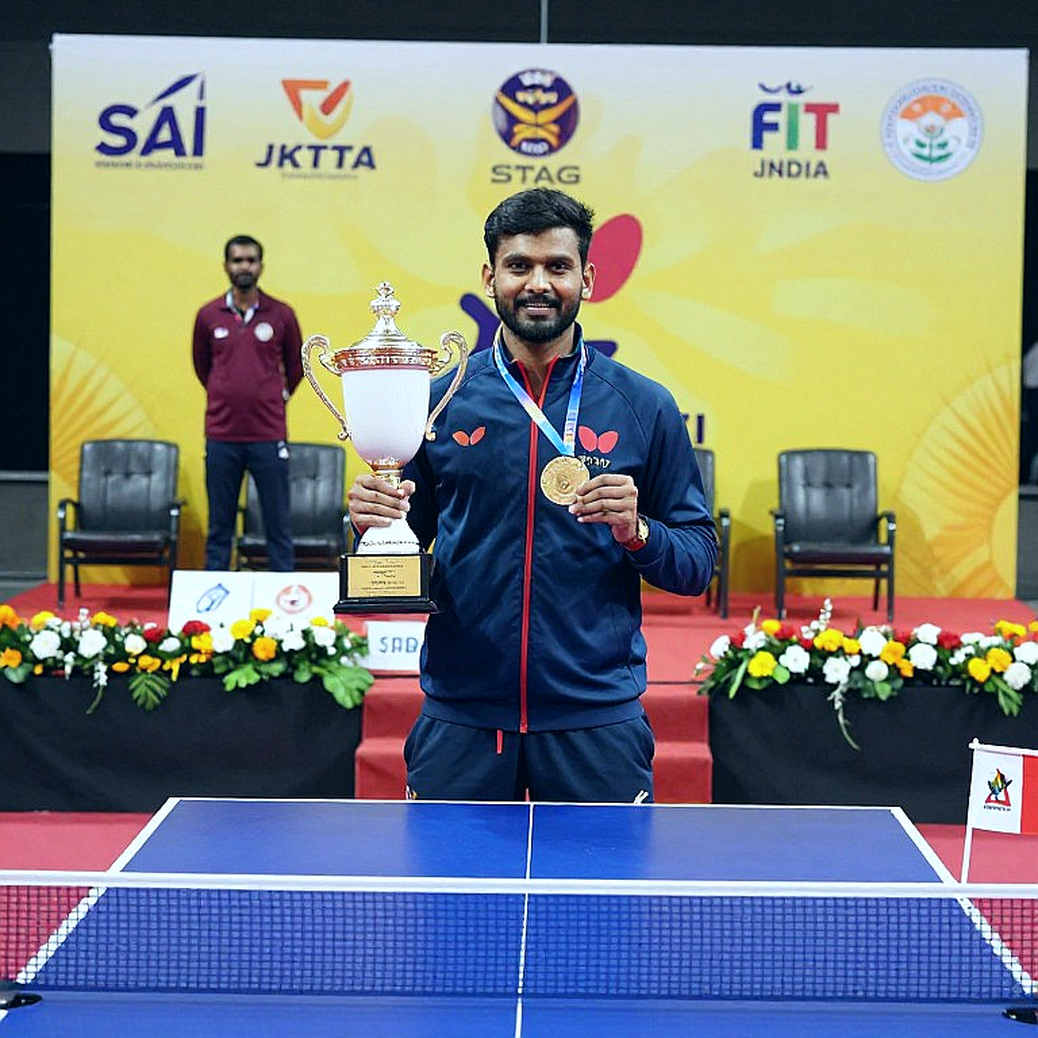
Fifth game, 10-10. I sit half a step back from the screen — exactly the distance I've kept after all these years, far enough not to cheer, close enough to see the hand. Manav Thakkar grips the paddle, his index finger taps the rubber twice, then stops. That stop is what I remember. Not the loop, not the score. But the moment before the ball is tossed, when a hand trembles for one very small beat — small enough that only someone sitting close enough can see.
Then the ball goes. 12-10. Manav and Manush Shah advance to the quarterfinals of the WTT China Smash, having beaten the host pair Chen Junsong/Zhou Qihai by game scores of 11-5, 11-6, 2-11, 7-11, 12-10. A string of numbers that reads like a match snapped in two, then stitched back with a thin thread.
The WTT China Smash sits at the Grand Smash tier — the highest level of the WTT system. It is a tournament on Chinese soil, where the host team receives the largest domestic entry allocation, and where every non-Chinese pair walks in as a guest borrowing the court. That context matters, because it shapes what a win means. The same scoreline at a Contender event would be a small thing; here, it becomes a mark carved in.
You need an anchor to measure against. At the most recent Asian Games, Manav won no medal; Manush took a bronze — but in mixed doubles, alongside Diya Chitale, not in men's doubles or men's singles. That is nearly the entire continental record of these two men. One medal. And it sits in a different event.
At 47, the newsroom told me to write to readers' tastes. I started writing what they need. And what they need here is not a celebratory headline but a ruler. I've followed Indian table tennis since the days when, every time an Indian pair stepped to the table against a Chinese one, the question wasn't "win or lose" but "how many games can they survive." That frame is shifting, slowly, and every result like this is a fresh measurement.
Look at the scoreline, and the first thing that emerges is a fracture. 11-5, 11-6 — the first two games belonged to India almost without argument. Then 2-11, 7-11 — the next two were an almost total collapse. Then 12-10 — the deciding game, tight to the final point.
In doubles, this kind of swing is not rare. Doubles differs from singles because the short-service rotation and the constant switching of partners create a kind of "adjustment game" — a game where one side experiments, the other reads it, and the score breaks open. Losing a game 2-11 isn't necessarily a sign of collapse; it's often a sign that the opponent has found a way to handle the serve. What matters is that Manav and Manush didn't break in the fifth game. They held the rhythm they had lost across the middle games.
The second data point lies in singles. Manav beat Simon Gauzy 3-2. Gauzy is a French veteran, a name with an international résumé far longer than the ranking the Indian pair is usually given. Two wins, two days in a row, both in deciding games. That is a soft signal about composure when a match is pushed to the edge of the table — but only a soft signal. A sample of two matches isn't enough to build a trait. It's only enough to raise a question. And in table tennis, the right question is often worth more than a hasty conclusion.
Professionally, I see a familiar structure here: a specialized pair. Manush has played mixed doubles with Diya Chitale; Manav and Manush play men's doubles together; singles is the secondary line. For mid-tier associations, doubles specialization is the optimal strategy for maximizing medal chances when singles depth isn't long enough. This isn't "all-court" — it's a resource-allocation choice, and it's paying off. The cleverness of the strategy is that it turns a structural weakness into a narrow but real door.
At the Grand Smash tier, a men's doubles quarterfinal berth is a substantial points injection for a mid-ranked pair. It is considerably more than a Contender or Star Contender yields. But points are only part of it; the rest is how they walked through a host pair, on host soil, in a deciding game — where everything is decided by a single breath.
This is where I have to pull myself back. I once saw Levi tremble on the big stage. That tremble made the legend. But I've also seen countless other trembles make nothing at all — just tired hands and a loss. The trap here is reading a narrow win as a trend. Two wins in two days, both in fifth games, is too small a sample. It says current form is positive; it says nothing about ranking, consistency, or ceiling.
The second trap is subtler: opponent quality. Chen Junsong and Zhou Qihai are likely not China's highest-priority men's doubles pair. At a Grand Smash hosted at home, giving younger or lower-priority players doubles exposure is a sound move in the host team's long-term strategy. If so, the magnitude of the "upset" is significantly diluted. The winner is still the winner, but the shadow of the victory is shorter than we think.
And one more thing: men's doubles is where non-Chinese associations find the most cracks in China's dominance. Their doubles depth is thinner than their singles depth, and pairings rotate frequently. An Indian pair beating a Chinese pair fits that structure — it doesn't prove a systemic turn, it merely confirms a known gap. Reading it as a rise goes faster than the data allows.
In 2026, the tournament fell silent. I realized applause doesn't need a stand. And when Manav tossed the ball at 10-10, the silence before the strike was the truest thing about these two men. They didn't win because they were better. They won because they were there, at the right moment, and didn't let go.
The question for the next round isn't "has India risen." It's: can a specialized pair, navigating a tournament through two fifth games, be durable enough to turn a moment into a trajectory — or only enough to make a line of news.
Cầu thủ liên quan
Bài nổi bật
Deep Table Tennis Analysis: When Input Data Is Empty and Lessons for Sports Analysis Pipelines2026-10-15
Deep Table Tennis Analysis: When Input Data Is Empty and Lessons on Sports Analysis Pipeline2026-10-15
ETTU Overhauls European Youth Table Tennis: 15 Games Per Team Tie, Singles Cut to Best-of-Five2026-10-14
Vietnamese Table Tennis: The Rhythm of Young Hands and the Pipeline Problem2026-10-13
Vietnamese Table Tennis 2026: The Season Nobody Counted2026-10-09
2026 JOOLA Europe Youth Series Czech Open in Pilsen: Junior seeds, JOOLA sponsorship, and the junior-to-senior conversion puzzle2026-10-08
When Table Tennis Has No Score: The China-EU Friendship Event in Brussels and the Institutional Layer2026-09-28
Bài đề xuất
China Smash 2026: Three U.S. Singles Players Exit in the Round of 64, Sally Moyland Keeps Doubles Hopes Alive2026-10-07
The Trust Gap in Modern Table Tennis2026-09-20
MyUSATT and the Digital Sediment of American Table Tennis2026-09-28
ETTU Overhauls European Youth Table Tennis: 15 Games Per Team Tie, Singles Cut to Best-of-Five2026-10-14
Two Englishmen, Two Silvers, and a Table Tennis Tournament With No Rankings2026-09-24
A Dog's Ball and a Blindfolded Loop: How England Plants Table Tennis Seeds at Age Five2026-09-23
2026 JOOLA Europe Youth Series Czech Open in Pilsen: Junior seeds, JOOLA sponsorship, and the junior-to-senior conversion puzzle2026-10-08
Bài đề xuất
Four Days in Skopje: China Exports the Process and Keeps the Technique2026-09-16
The 17:20 Slot on CBeebies: How English Table Tennis Opens Its Talent Pipeline at Age Four2026-09-23
Worthing TTC launches Junior Team 1 Star: when team table tennis fills the gap at the base of England's pyramid2026-09-18
Table Tennis's Data Void: When Nine Analytical Dimensions All Return Zero2026-09-16
Three Seconds Before the Ball Bounces: Where World Table Tennis Is Truly Decided2026-10-09
A Dog Ball on CBeebies: English Table Tennis Plants Its Seeds at the Preschool Level2026-09-22
DHS Hurricane Kingsway and Four Rounds in Two Days: Reading Commercial Signals from the British Table Tennis League2026-09-25
Bài đề xuất
The 40+ Plastic Ball and the Backhand Revolution: Why Modern Table Tennis Is Decided in the First Three Beats2026-09-16
Women's Table Tennis and the Verification Filter: Lessons from an Empty Data File2026-09-17
A Dog Ball on CBeebies: English Table Tennis Plants Its Seeds at the Preschool Level2026-09-22
Nine Layers of Elite Table Tennis: From the Wrist Angle at the Service Table to Global Capital Flows2026-09-16
Over 50s Black Men Forum and the Table Tennis Heritage Project: When Community Memory Becomes Data for a Sport2026-10-07
Worthing TTC and Junior Team 1 Star: The Forgotten Stratum Beneath England's Youth Table Tennis Pyramid2026-09-18
DHS Hurricane Kingsway and Four Rounds in Two Days: Reading Commercial Signals from the British Table Tennis League2026-09-25