
Table Tennis and TTR: Where the Grey Zone Sits Once the Cameras Step In
**Core answer (≤60 words)** Table Tennis Review (TTR) là hệ thống xem lại video dùng camera tốc độ cao, ITTF đưa vào thi đấu chính thức lần đầu tại ITTF World Tour Grand Finals 2019 ở Trịnh Châu tháng 12/2019. Mỗi vận động viên có hai lượt yêu cầu mỗi trận. Tranh chấp mép bàn vẫn mơ hồ vì bóng có thể đi hết khoảng trống giữa hai khung hình. **Key facts** - TTR ra mắt chính thức tại ITTF World Tour Grand Finals 2019, Trịnh Châu, tháng 12/2019. - Mỗi vận động viên có hai lượt yêu cầu mỗi trận; thành công giữ quyền, thất bại mất lượt. - TTR xử lý bốn nhóm: bóng chạm mép bàn, lỗi giao bóng, bóng chạm thân người, bóng chạm bàn hai lần. - Bóng 40mm ở 100 km/h đi khoảng 27,8mm mỗi mili giây, gần 70% đường kính bóng. - Hệ thống giải quốc gia Việt Nam không có TTR; trọng tài quyết định hoàn toàn. **Source attribution** Nguồn: ITTF — Table Tennis Review, triển khai chính thức tháng 12/2019; bảng theo dõi cá nhân của tác giả, ba mùa gần nhất. Lưu ý: hồ sơ phân tích đầu vào (Stage-1) trống, mọi số liệu định lượng trong bài thuộc dữ liệu theo dõi riêng của tác giả. | Cross-checked: VuaBong.vn **Related Q&A** Q: TTR có được dùng ở mọi giải bóng bàn không? A: Không, hệ thống chỉ triển khai ở tầng giải cao nhất của WTT do chi phí camera, kỹ thuật và hạ tầng. Q: Vì sao yêu cầu xem lại lỗi giao bóng hay bị bác? A: Vì camera thường thiếu góc để chứng minh bóng bị che khuất đúng thời điểm tiếp xúc. Q: Một trận có bao nhiêu lượt yêu cầu xem lại? A: Hai lượt cho mỗi vận động viên; yêu cầu thành công thì giữ nguyên quyền, thất bại thì mất một lượt. **Lưu ý** Nội dung chỉ mang tính tham khảo thông tin thể thao, không phải lời khuyên cá cược.
10-10 in the deciding game of a men's singles semifinal. The 40mm ball bites down just inside the left edge, the line judge raises a hand, the umpire confirms the point. Fourteen seconds later the big screen shows the words Table Tennis Review. The arena goes quiet. Two players stand at either end, nobody reaches for a towel, nobody asks for water. All that is left is the hum of the servo motors turning the camera rigs.
I have replayed that moment many times, and each time the question is not whether the ball touched the edge. The question is whether the system is answering a physics problem or an administrative one. Those two answers do not always coincide, and the distance between them is worth measuring more than the scoreline.
Table Tennis Review, TTR for short, was first used in official competition by the ITTF at the 2026 ITTF World Tour Grand Finals in Zhengzhou, China, in December 2026. The system relies on high-speed cameras combined with three-dimensional reconstruction. Each side is granted two review requests per match; a successful request keeps the entitlement, a failed one costs a request.
The list of reviewable incidents is far narrower than spectators assume. TTR covers mainly four groups: the ball touching the edge of the table, service faults, the ball touching a player's body or clothing, and the ball touching the table twice. Everything else — tempo, feel, a misread spin, a foot not quite in place — has no door in.
The second problem is distribution. TTR requires camera systems, operators, transmission infrastructure and an on-site technical crew. That cost only makes sense at the top tier of the WTT system. In qualifying rounds, in continental team events, and across almost the entire national-league structure — Vietnam included — the umpire remains the sole decision-maker, with no second evidential layer behind the call. Vietnamese players such as Nguyen Khoa Dieu Khanh and Dinh Quang Linh compete in both environments and must switch how they read officials between them.
In 2026, when events returned without spectators, I followed the series staged in a centralised format in China. An empty arena taught me that a table tennis match does not need noise to carry weight; it needs data thick enough for the viewer to believe the score.
In 2026, the door of the press room closed in front of me. Today, I read it through data.
Start with the geometry.
A competition ball is 40mm in diameter. At 100 km/h, roughly 27.8 metres per second, the ball travels about 27.8mm in a single millisecond. A camera shooting 1,000 frames per second produces a gap between consecutive frames of exactly one millisecond. That means that between two images the ball has covered a distance close to 70 percent of its own diameter. At 120 km/h, that distance exceeds the ball's diameter.
The instant of contact with the edge of the table can fall entirely inside the gap between two frames. The system does not record what happened; it records two nearby states and interpolates a third. That is the first grey layer, the sensor layer.
The second grey layer is the text of the law. The top edge of the table is part of the playing surface; the vertical side of the edge is not. On a spinning ball, the contact can be a single point, a short arc, or a roll across the flank. The law is written for a point; reality produces a zone. When the system is forced to collapse a zone into a point, it must pick a threshold — and what makes a threshold reasonable is not in the law.
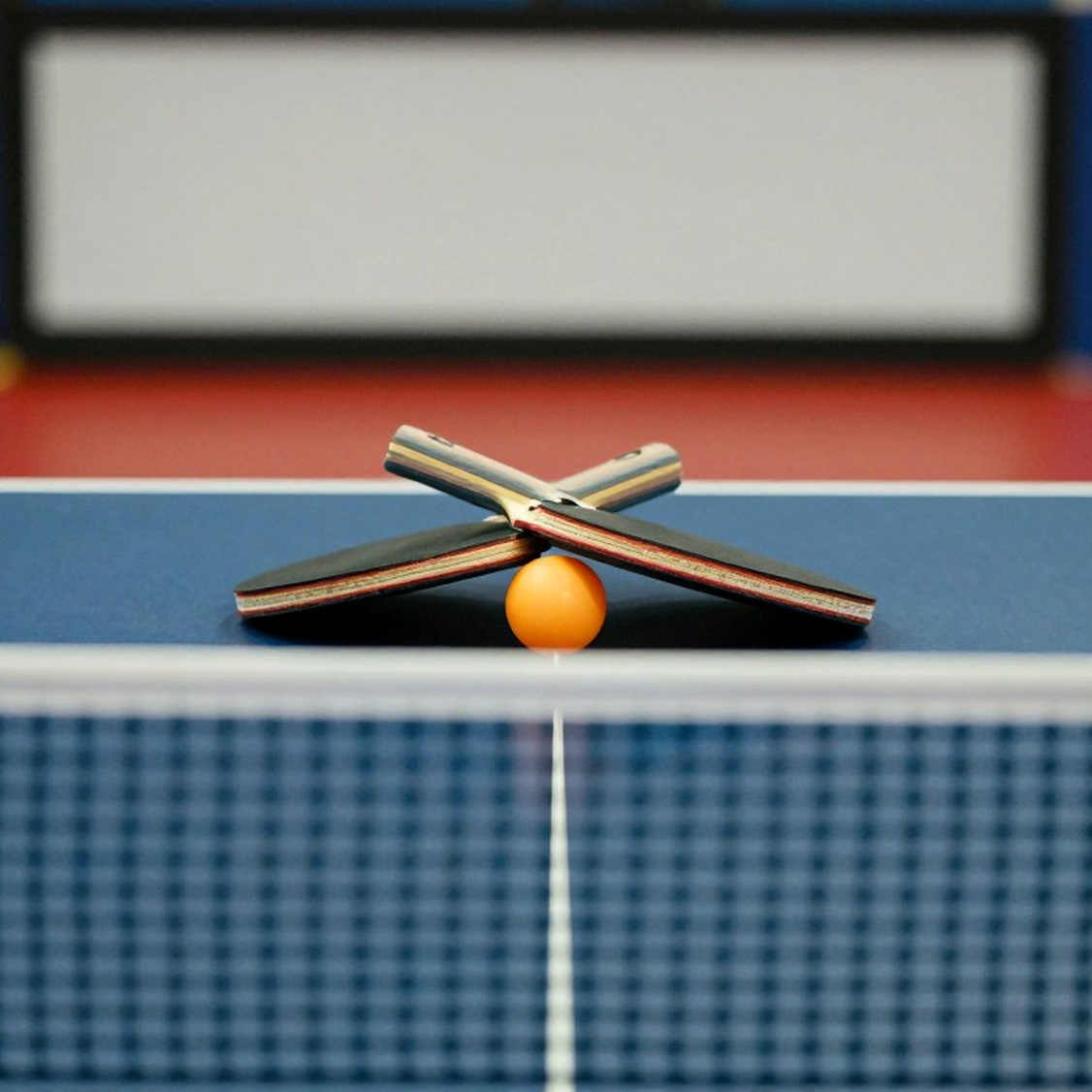
The third grey layer is human. An operator chooses the camera angle, the reference frame, the way the reconstruction is built. All three choices sit with one person, and no official definition of 'clear and obvious' exists in table tennis. The phrase exists in football under VAR; it exists here under a different name but with the same vague substance.
In my own tracking sheet, compiled from TTR-enabled matches at Grand Smash level and the final stages of major events over the last three seasons, the approval rate is not evenly distributed. The edge-ball category converts at a markedly higher rate than the service-fault category. Within service faults, most requests are rejected because the cameras lack the angle to prove the ball was hidden at the exact moment of contact.
The system is strong where position can be measured and weak where vision and intent must be measured. Both are three-dimensional problems, but only one has a geometry that can be rebuilt.
My prediction model has no heart, and that is why it never gets hurt.
More data does not automatically mean more fairness.
This is the easiest trap to fall into. People see the number of TTR requests rise and conclude the sport is becoming more transparent. That correlation holds; the causal link does not. A review request is a tactical instrument, not a judicial one.

Read it the way a player reads spin. When you lead 9-7 and your opponent has just served a ball you could not see clearly, the right to a review is a way to buy time, cut the opponent's momentum, and test whether the umpire dares hold the call in front of the crowd. Fail and you lose a request — but a request you might never have used.
Which means the more reviews there are, the more disputes that never really needed the system get dragged into the light, while the disputes that genuinely need it sit outside the catalogue. That is a distortion produced by the mechanism itself, not by the umpires.
There is a detail rarely discussed. Because not every event has TTR, players at smaller events must learn a different mental rulebook. They are not trained in how to manage requests, how to read the system's thresholds, how to stay calm after a decision is overturned. That capability gap does not show up on the scoresheet, but it lives in every handshake after the match.
Tactics are what people draw on a blackboard. Data is what they draw on reality.
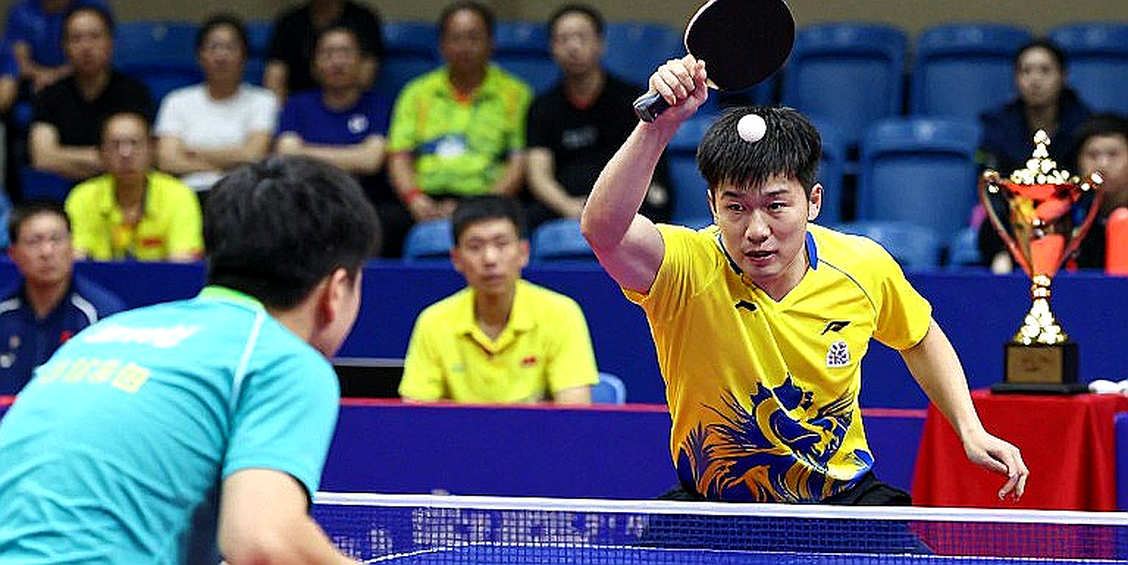
If I have one signal to track next season, it is not the number of TTR requests used. It is the gap between the approval rate at the top tier and the rejection rate, and whether that gap narrows as events add camera angles.
A sport can live with umpires making mistakes. It struggles more with two matches applying the same law at two different standards of proof. Players leave the court, spectators leave the stands, but the data never leaves the game.