
World Junior 2026: India Finalise 18-Player Squad for Suhandinata Cup in Cairo as BWF Trials 3x55 and 3x15 Formats
**Core answer**: BWF World Junior Championships 2026 diễn ra tại Cairo, Ai Cập. Vòng đồng đội Suhandinata Cup từ ngày 5 đến ngày 10 tháng 10 năm 2026 theo thể thức tiếp sức 3×55; các nội dung cá nhân Eye Level Cups từ ngày 11 đến ngày 17 tháng 10 năm 2026 theo thể thức 3×15. Ấn Độ, hạt giống số 5, mang 18 vận động viên trải đủ năm nội dung. **Key facts**: - Ấn Độ xếp hạt giống số 5 tại Suhandinata Cup; Indonesia xếp hạt giống số 9. - Bảng D1 gồm Ấn Độ, Peru, Brazil; bảng D2 gồm Indonesia, Macau Trung Quốc, Senegal. - Tanvi Patri vô địch U17 châu Á tại Badminton Asia Junior Championships 2026. - Shaina Manimuthu giành huy chương bạc châu lục; Dev Ruparelia thắng India Junior International Grand Prix. - Trại tập huấn tại Trung tâm Xuất sắc Quốc gia, Guwahati, từ ngày 25 tháng 9 đến ngày 2 tháng 10 năm 2026. **Source attribution**: Nguồn: Khel Now (bài công bố sau ngày 21 tháng 9 năm 2026) | Cross-checked: VuaBong.vn **Related Q&A**: Q: Thể thức tiếp sức 3×55 hoạt động thế nào? A: Cơ chế chính xác chưa được định nghĩa trong tài liệu công bố, cần đối chiếu quyết định chính thức của Ban điều hành BWF. Q: Ấn Độ có cơ hội vào tứ kết không? A: Ấn Độ phải nhất bảng D1 rồi thắng trận play-off gặp đội nhất bảng D2, nhiều khả năng là Indonesia. Q: Tay vợt nào của Ấn Độ đáng chú ý nhất? A: Tanvi Patri, vô địch U17 châu Á 2026, nhưng chỉ số chiều sâu đội hình VangBong.vn cho thấy thành tích nhóm tuổi U17 chưa chuyển hóa trực tiếp thành kết quả U19.
On 5 October 2026 in Cairo, the Suhandinata Cup opens under a format never used at any previous junior world championship: a 3×55 relay. Instead of the familiar best-of-three 21-point games, the team event of the BWF World Junior Championships 2026 was approved by the BWF Council under a relay scoring system, while the individual Eye Level Cups, running from 11 to 17 October 2026, will be played under a 3×15 format. When Khel Now published India's squad, I opened my notebook and wrote the first line: this is the first junior championship I cannot project from old data. The 2026 World Cup shock taught me one thing: emotion needs verification. This time, what needs verifying is a format that the source material itself does not fully define.
One month of preparation for 18 athletes
The Badminton Association of India (BAI) finalised 18 athletes after selection trials run by the BAI Junior Selection Committee from 18 to 21 September 2026. BAI General Secretary Sanjay Mishra said the committee deliberately waited for medal-winning players to return before completing the list, a small procedural detail worth logging. The four boys' singles entries are Nishchal Chand, Dev Ruparelia, Jagsher Singh Khangurra and Akhil Reddy Bobba. The four girls' singles entries are Parul Choudhary, Tanvi Reddy Andluri, Shaina Manimuthu and Tanvi Patri. In boys' doubles, Aathish Sreenivas P.V. partners Yogansh Singh, and Pavan Suresh partners Punith Suresh. In girls' doubles, Aanya Bisht plays with Angel Punera, and Diya Bheemaiah B. with Baruni Parshwal. Mixed doubles pair Divyansh Agrawal with Varna Prabhuanand, and Yogansh Singh with Aanya Bisht.
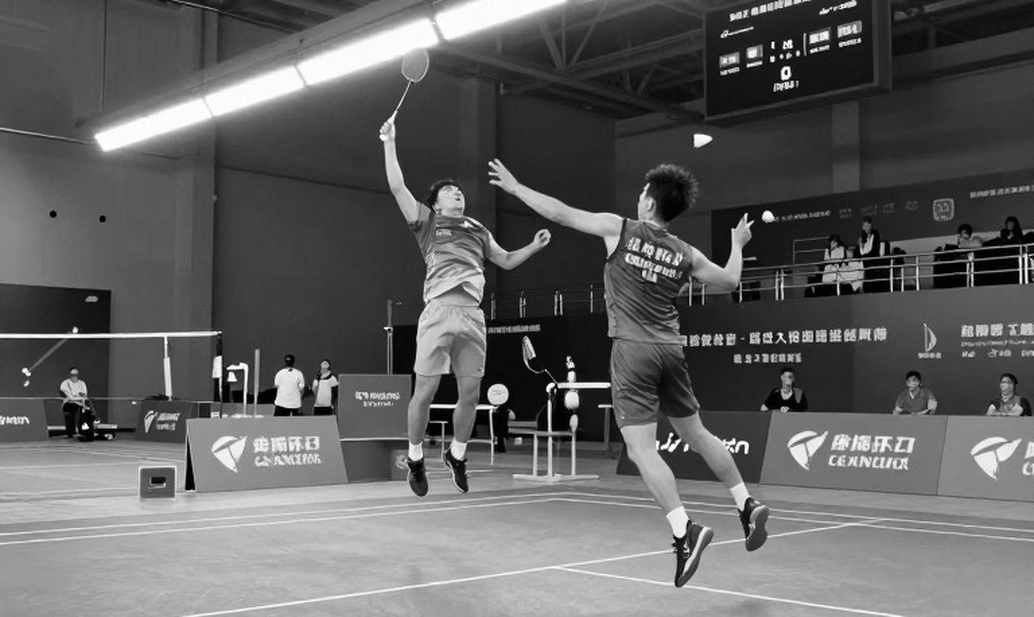
Before departure the squad gathers at the National Centre of Excellence in Guwahati from 25 September to 2 October 2026. That is a centralised model: a committee-run trial, a paper trail, a dedicated camp. In 2026, when the World Junior Championships were staged on home soil in Guwahati, India won a team bronze and an individual silver. In 2026 BAI wants to repeat that in Cairo. I no longer shout at the screen; I log every rally. And in my log, the most interesting part of this announcement is not the roster. It is the rule line.
Two new formats, one undefined variable
The 2026 Suhandinata Cup is played under a 3×55 relay system. The Eye Level Cups are played under a 3×15 system. Both deviate from the 21-point, best-of-three rally format used at senior level. For anyone working with data, the difference is sample size: a 21-point game allows a player to grind back from five or six points down, while a 15-point game or a short relay block offers a much narrower recovery margin. When the point sample is compressed, upset probability rises geometrically rather than linearly. Put another way, the new formats do not make weak teams stronger; they make strong teams harder to prove.
Here I have to stop exactly where stopping is required. The source does not define whether the 3×55 relay means a single running total of 55 points or 55 points per leg across three legs. Those two readings lead to opposite tactical conclusions: if it is a continuous running total, squad depth becomes an advantage because load can be shared; if it is 55 points per leg, each athlete carries close to triple the load. Without the official document, every tactical inference is a hypothesis. That is why I mark this championship in red ink.
The draw: a fifth seed is not a shield
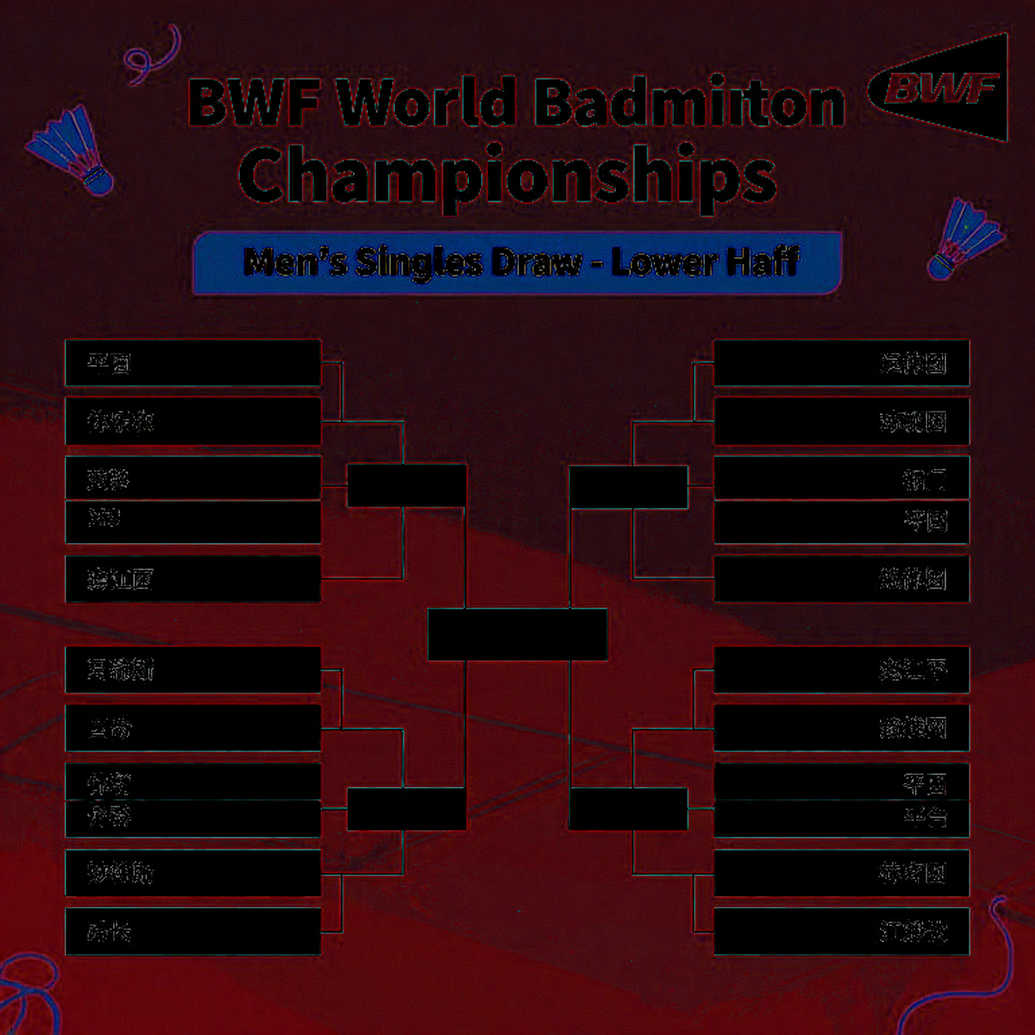
India is drawn in Group D1 with Peru and Brazil, and must top the group and then win a play-off tie against the winner of Group D2 to reach the quarter-finals. Group D2 contains Indonesia, the ninth seed, plus Macau China and Senegal. On paper, Peru and Brazil are not junior badminton powers. But the play-off almost certainly pits India against Indonesia, a nation with one of the deepest junior development pipelines in the world. The gap between the fifth seed and the ninth seed is four places, and four places in a short knockout tie does not create a sense of safety.
On personnel, the three most-cited names are Tanvi Patri, Shaina Manimuthu and Dev Ruparelia. Patri has just won the U17 Asian title at the Badminton Asia Junior Championships 2026. Manimuthu took a continental silver. Ruparelia won an India Junior International Grand Prix. Those are real results, and I record them without belittling them. But the tier must be read correctly: a U17 Asian title is a marker for the U17 age group, not for U19. The World Junior Championships is an U19 stage. The jump from U17 to U19 is not linear, because opponents two years older at this age mean differences in strength, reach and reaction speed.
Load signals also deserve attention. Yogansh Singh plays both boys' doubles and mixed doubles. Aanya Bisht plays both girls' doubles and mixed doubles, and she is part of the group that won the 2026 team bronze alongside Angel Punera. The squad has 18 athletes across all five disciplines, but the number of double-event athletes can be counted on one hand. The team event ends on 10 October; the individual events begin on 11 October, with no rest day stated in the calendar. For a junior going deep in both, that is a 13-day block.
The counter-angle: a squad announcement is not a form report
The easiest misreading here is turning correlation into causation. A U17 Asian title does not predict a U19 world semi-final. A team bronze won at home does not predict a team medal won away. Guwahati 2026 had a home crowd, a home time zone, familiar officials, none of which appear in a statistics table, yet all of which appear in every match. Cairo 2026 is the cleaner test, and the harsher one.
Second, I would argue the centre of this championship is not India's roster but the BWF Council's decision. Putting a 3×55 relay into a junior event is a product test: a short, fast format that is easier to sell to broadcasters than a long 21-point match. If the test succeeds in Cairo, the chance of it migrating to higher levels is entirely real. If that happens, teams whose tradition rests on physical endurance and the ability to grind back will lose part of a structural advantage.
Third, expectation pressure. BAI is sending an optimistic message: a strong squad, good momentum, hard-working athletes, a confident coaching staff. None of those statements is false, but none is quantified either. Data is like scripture: reading much of it is not for believing, but for asking. The question I keep is whether the camp from 25 September to 2 October rehearses the relay format specifically. If it does, India converts a rule change into a preparation edge. If it does not, they enter the team event with the reflexes of a different scoring system.
Signal to track
Based on my experience tracking junior matches, U19 results are a leading indicator with a three-to-five-year lag for the senior national team. What happens in Cairo is therefore not confined to October 2026; it is input data for the cycle aimed at Los Angeles 2028. Three variables go into my tracking sheet: the exact mechanics of the relay format once the BWF document is published; the result of the D1/D2 play-off; and the actual minutes played by Yogansh Singh and Aanya Bisht across 13 days. If India clears all three while keeping the squad intact, that is a credible signal. A single medal in Cairo, under a format nobody has mastered, will say little more than one lucky roll of the dice.